


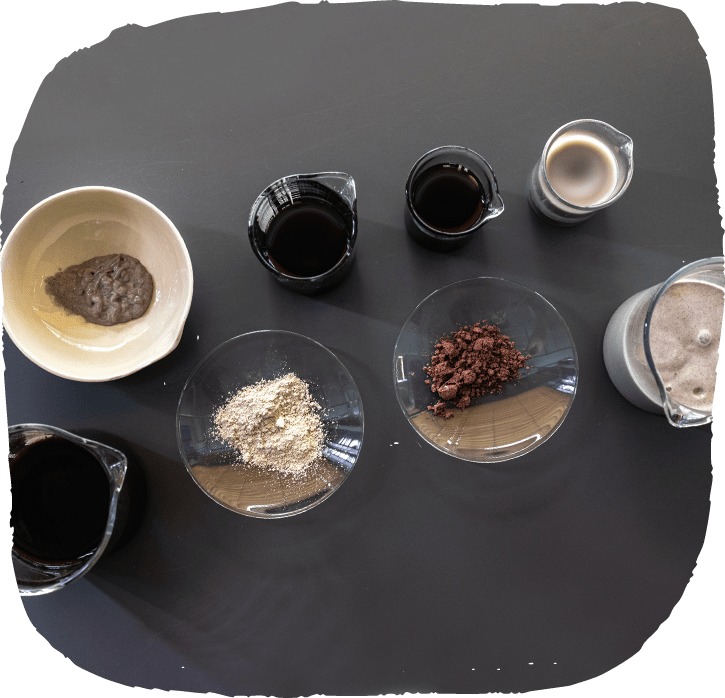



Inside the formulator’s lab
Cosmetic scientist Jaana Ailus has spent two decades in formulation. We met her in the lab to talk about what happens when a biodiversity-rich extract meets a real product, and what she would tell a formulator running their first trial.
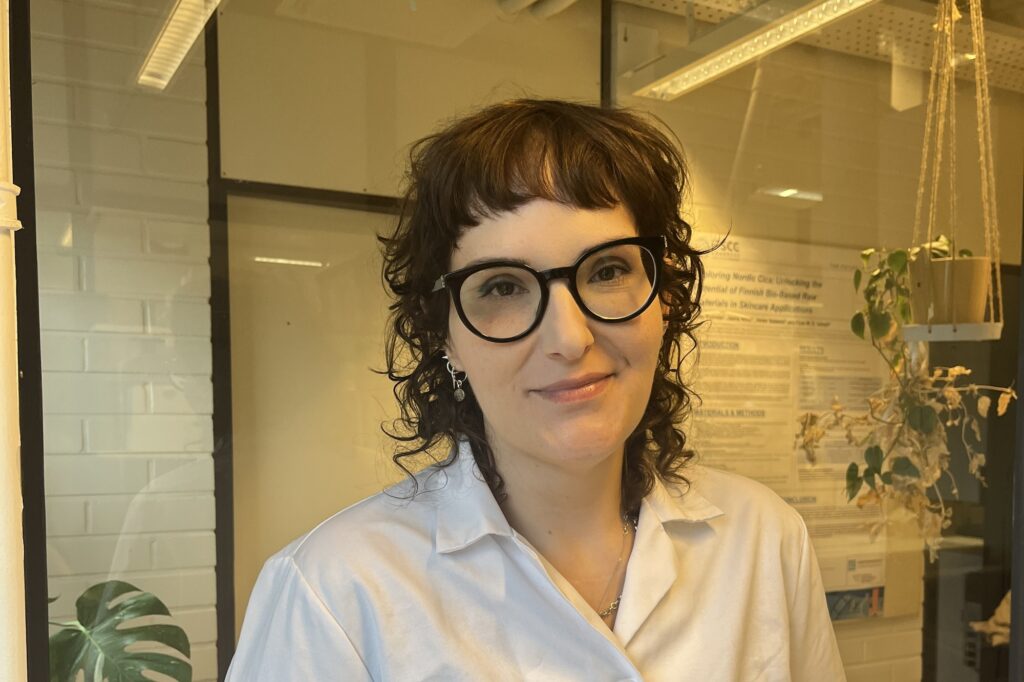
Some ideas are born around a table. Others only become real in a lab.
So this time, I went to see Jaana Ailus where ideas meet reality: in the lab.
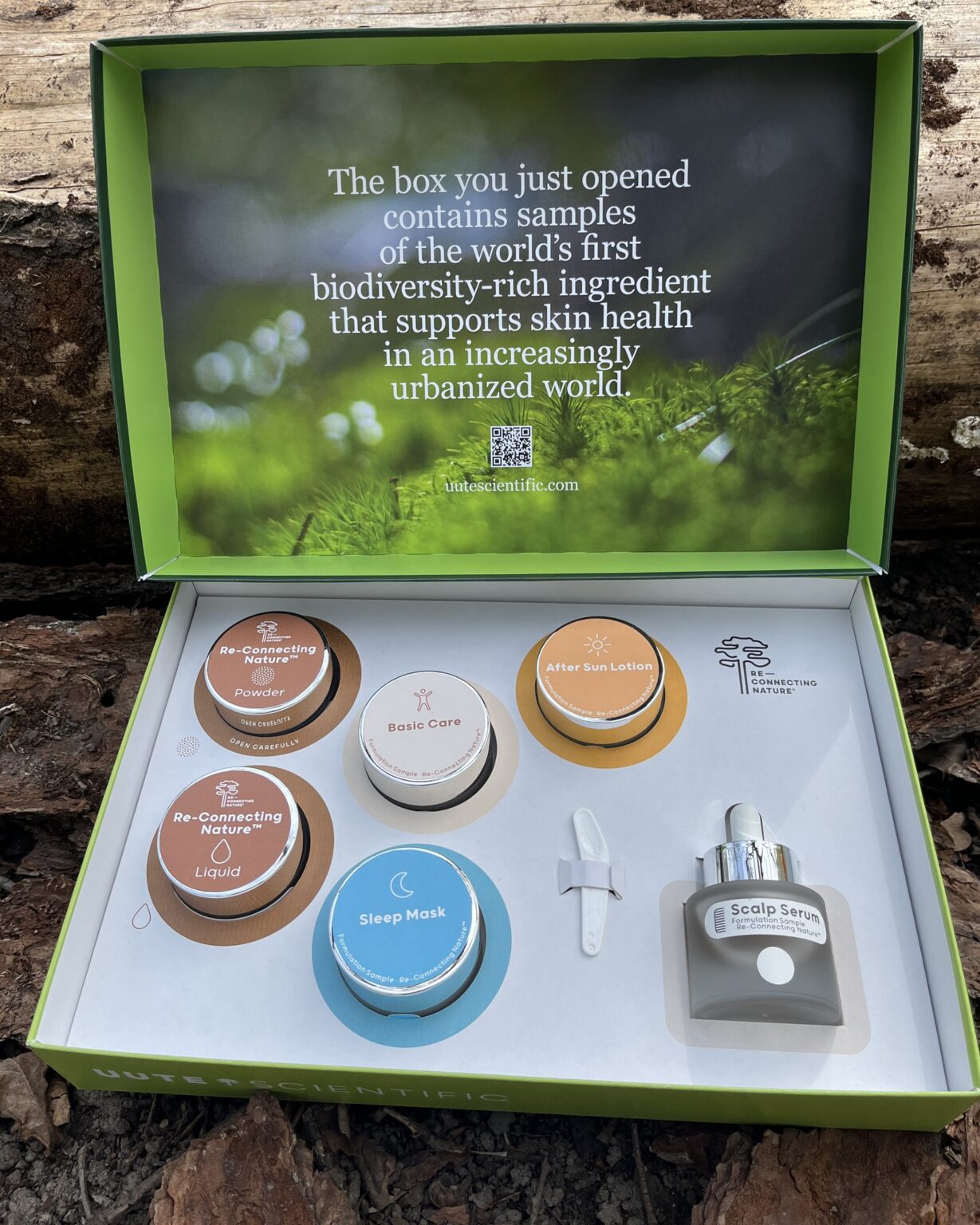
Jaana is a cosmetic scientist and PhD researcher at Liverpool John Moores University, with two decades of experience in formulation. I have known Jaana for many years, and we have crossed paths on a number of projects, including our Biodiversity Box — five skincare and scalp-care products developed for sensitive and atopic skin.
It was a project that brought together commercial thinking and deep formulation expertise to turn an idea into something that could actually work in a bottle.
Because an ingredient may look good on technical paper. The real test begins when it meets a formulation.
Inside the formulator’s lab
Our Re-Connecting Nature™ microbial extract (INCI name Humus Extract) is not a conventional active ingredient. It is biodiversity-rich, inherently complex, and different from the highly defined molecules formulators are used to working with.
Imagine I’ve just handed you a bottle of our ingredient. Where do you start?
I would start by looking at where the raw material would be most beneficial and have the best skin contact. Ideally a leave-on product.
Then I would look at what the ingredient is compatible with, and what it isn’t. In this case, it is compatible with pretty much everything, so this is not an issue. Depending on the application, it could be a hydrous or anhydrous product, so there are no limits on what could be formulated with it.
You know by now where it behaves beautifully, and where it needs more respect. What should a formulator be careful about?
The ingredient works best in emulsions with a medium to high viscosity. This way the particles are evenly distributed and the end result is sensorially pleasing. In completely aqueous systems, special care must be paid to the suspending agents. Also, if a product is heated up, the ingredient must be added at below 40 °C, and this could be an issue for more solid products.
During Covid you heard about our biodiversity hypothesis and decided to try the ingredient yourself. What did that teach you, and did it change how you see the ingredient?
I have used it on myself and my children. Both children are allergy-free and have robust immune systems. It is impossible to prove if Re-Connecting Nature is the reason for this, but it is a very interesting correlation.
It changed the way I look at the ingredient, since, as a lotion, it was very easy to use and incorporate into our daily lives.
Our microbial extract does not fit the usual one molecule, one target thinking. Does an ingredient like this change how you think as a formulator?
Yes. While it has a simple INCI, it is a complex mixture with many benefits. Like with many natural ingredients, the INCI doesn’t say everything, but in this case the scope is much broader than with, say, a plant extract.
You have used the ingredient in many different customer projects. Looking at all those brands, do you see a pattern?
All products fit in the natural cosmetics category, and I believe all are COSMOS-certified. All products are also part of a larger range, so the biodiversity wealth can be spread over a number of product types.
In the Biodiversity Box project we came at it from different directions: I was thinking about the target market and the story, you about whether those ideas would survive contact with a formulation bench. What did you enjoy most about that project?
I enjoyed making simple yet innovative formulations that could easily be modified to become finished products for different clients. My favourite product of the Box is the scalp serum, as it is a rather innovative way to get a lot of exposure in a leave-on product.
And perhaps more importantly: what did you learn from it?
I think it was a very good example of what happens when commercial thinking and formulation expertise are allowed to challenge each other, rather than working in separate mindsets.
When working from a formulation perspective combined with commercial thinking, it is easier to come to a solution that is functional, easy to manufacture and commercially viable.
You have worked with our ingredients in skincare, sensitive-skin concepts and scalp care. Where do you see the biggest untapped opportunities?
Scalp care. While the frame formulation exists, there is so far no commercial product in this category on the market. It is a leave-on lightweight serum that will disappear into your scalp and not leave it greasy or sticky. It gives your hair the biodiversity-rich forest experience.
Let’s make this genuinely useful for other formulators. What would you tell someone running their first trial tomorrow?
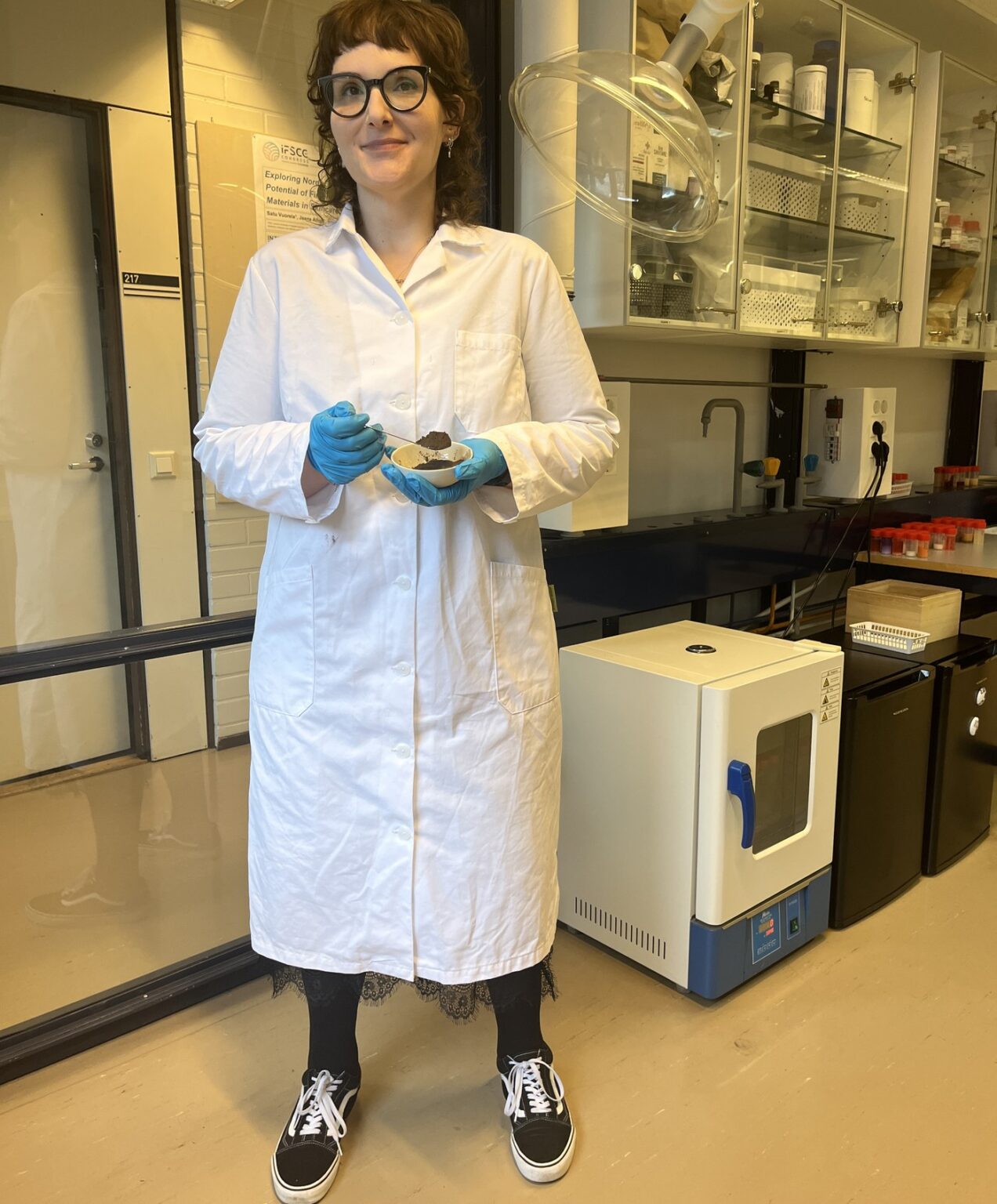
Don’t be scared of the colour. It will look so much lighter in an emulsion. And no, it will not interfere with the microbial stability of the product.
And if you had to reduce it to three rules?
- Keep it simple, let the ingredient be the hero in the product
- Embrace the colour
- Think outside the box
What will change most in the way we formulate cosmetics?
We are moving further and further away from microplastics and other well-known and widely used ingredients due to increased knowledge about their environmental impact. The industry is slowly greening up.
If we cannot change our lifestyle, we can at least try to expose ourselves to natural microbial diversity in other ways.
After the science, the formulations and the customer projects, why do you believe in biodiversity-rich ingredients?
It represents a genuine new direction for cosmetics, rather than simply another interesting ingredient. Our lives are increasingly urbanised, and we are moving further away from nature. Nature exposure can be very limited in many people’s daily lives. This is where biodiversity-rich ingredients come into play. If we cannot change our lifestyle, we can at least try to expose ourselves to natural microbial diversity in other ways.
Interested in ordering the Biodiversity Box?
Contact Oliver Boldt.


